
Almost every couple planning a wedding on the Costa del Sol reaches the same fork: a private finca with its own grounds, or an established hotel that does weddings every weekend of the season. Both work beautifully in Marbella. They simply ask different things of you, and they shape the evening differently — including the corner where your guests queue up and walk away with a printed photo in hand.
This guide is written from the supplier’s side of the night. Over five years of setting up photo booths across Marbella and the province of Málaga, we have worked in walled gardens with one extension lead and in ballrooms where everything was already in place. Here is what that experience says about choosing between the two.
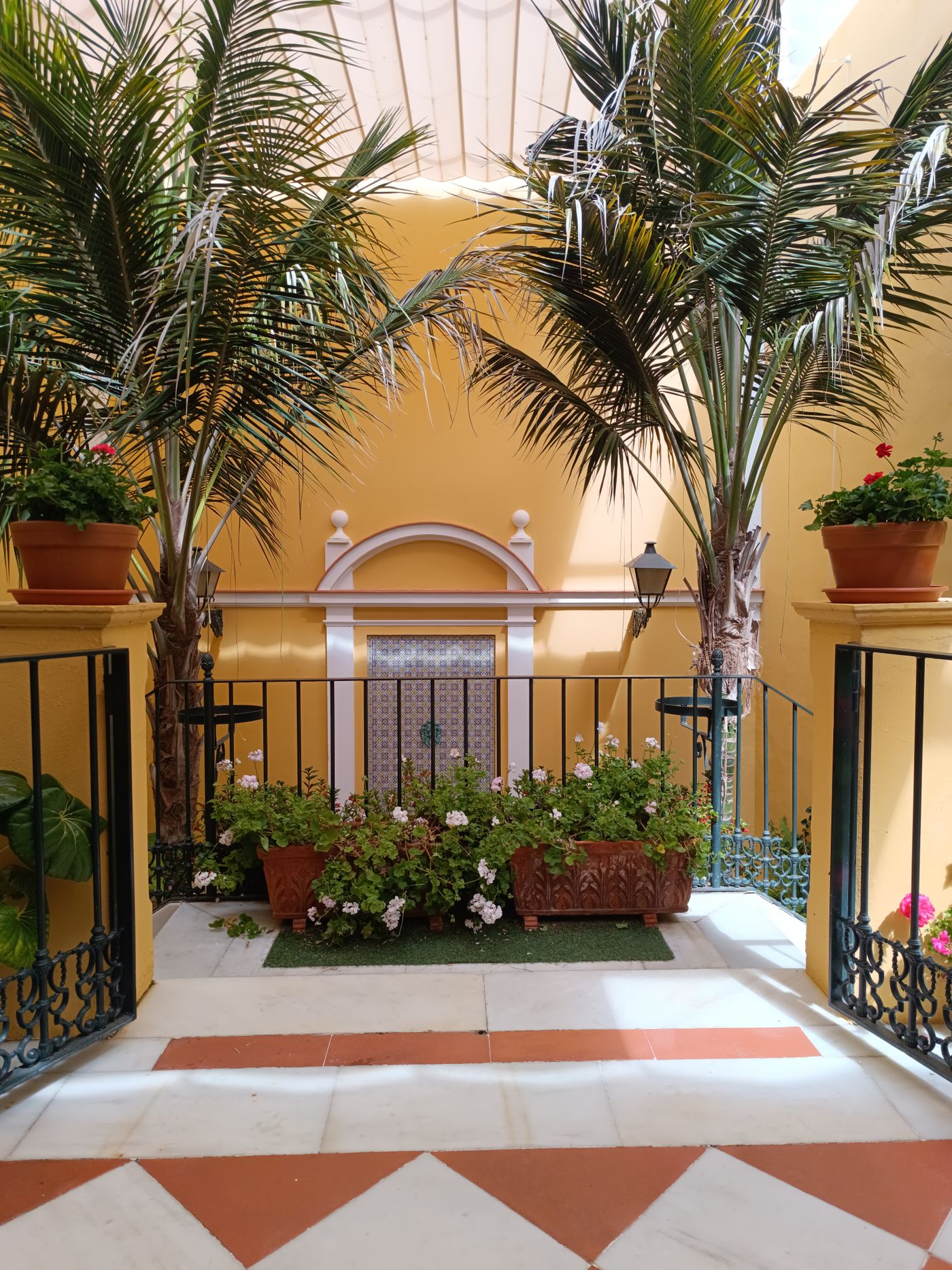
A finca is a private estate — grounds, usually a main house, often a pool, and almost always an outdoor dining area. The appeal is obvious: it is yours for the day. No other event in the next room, no fixed menu, no house style you have to work around. You choose the caterer, the furniture, the music and the timeline.
What that freedom costs is coordination. A finca is a blank canvas, which means that everything a hotel quietly provides has to be brought in or arranged: catering, bar staff, furniture, toilets in some cases, and — the one that matters most to us — power. A finca’s electrical supply was designed for a family home, not for a kitchen, a DJ rig, festoon lighting and a photo booth running at the same time. That is solvable, but it has to be solved before the day, not at eight in the evening with the first course already out.
Fincas are also outdoor-first. In May or September that is a gift; in late October it means you need a plan B that is more than an optimistic glance at the sky. Ask the owner directly: if the weather turns at 19:00, where does dinner go, and does that space still fit a dance floor?
A hotel takes most of the logistics off your plate: kitchen, bar, staff, tables, sound limits, parking, sheltered indoor space, and a banqueting manager whose job is to keep the evening on time. If half your guest list is flying into Málaga, the fact that they can sleep upstairs rather than drive the A-7 at two in the morning is worth more than it sounds.
The trade-off is that you are a guest in someone else’s system. Menus come from a set of options, suppliers may need approval in advance, and the terrace you fell in love with may belong to the restaurant until a certain hour. None of this is a problem — it just means decisions are made earlier, with less room to improvise.
For a photo zone, hotels are the easiest venues we work in. Power is reliable, floors are level, there is almost always an indoor fallback, and the staff have seen a booth before. The one thing to settle early is which corner is yours, because function rooms on the coast are planned tightly and the obvious spot is sometimes already promised to the cake table.
Rather than comparing venues on photographs, compare them on these six points. They are the ones that change how the evening feels.
If you are still drawing up a shortlist, our guide to the top wedding venues in Marbella runs through five very different spaces and what each one means for the flow of the evening.
This is the part couples usually settle last and should settle first, because it takes one short conversation with the venue.
We need a flat area of roughly 3 × 3 metres. That is the booth itself, the backdrop, and enough room for a group of six or seven to stand in front of it without backing into a table. The backdrop frame measures 2.5 × 2.5 metres and the tallest piece of equipment reaches about 1.8 metres, which matters under low beams, marquee edges and pergolas.
We need one standard socket within reasonable reach. At a hotel this is never an issue. At a finca, it is worth asking whether the garden sockets sit on the same circuit as the catering tent — if they do, a kettle and a photo booth can trip the same breaker.
Setup takes about an hour, and it should happen before guests arrive rather than during the aperitif. The usual rhythm on the coast is: ceremony, drinks, dinner, and the booth opening as the dancing starts. It stays busy for the rest of the night.
Outdoors looks wonderful until two things happen: the light drops and the wind picks up. A fabric backdrop on a frame behaves like a sail, so an exposed terrace facing the sea is the one position we usually ask to move. Our studio lighting solves the darkness — wind decides the spot.
The best outdoor position is sheltered on at least one side: against a wall, under a pergola, on the lee side of the house. The best indoor position is near the dance floor but not in the route to the bar, so the queue does not block anyone.
At a finca, walk the site and pick the spot in advance. At a hotel, ask the banqueting manager — they will know which corner works.
Our pricing starts at 400 € for three hours, and it is the same price across the whole province of Málaga. A wedding in a finca in the hills behind Coín is quoted exactly like one in a hotel on the Golden Mile — there is no travel supplement for coming inland or along the coast.
A living flower backdrop costs 150 € on top. Most wedding couples take it, because it photographs as part of the decor rather than as a booth. A clean backdrop, or at some venues the room itself, works too.
For a full breakdown of what changes the final figure — hours, backdrop, guest numbers — see our guide to photo booth hire costs on the Costa del Sol.
We cover the whole province of Málaga at the same price: Marbella, San Pedro, Estepona, Benahavís, Mijas, Fuengirola, Benalmádena, Torremolinos, Málaga city, Nerja, Ronda and the villages inland. Not sure your venue is inside the province? Send the name and we will confirm.
Whichever way you go, ask the venue these four things before the contract is signed, and forward the answers to us when you book:
Couples who plan the photo zone alongside the seating plan end up with the booth in the right place. Our guide to the wedding photo booth in Marbella goes deeper into timings, and there are ideas for the overall look of the day in our round-up of wedding trends for 2026.
Not necessarily, and the headline hire fee is misleading either way. A finca’s fee usually excludes catering, staff and furniture; a hotel’s package usually includes them. Compare the total, not the venue line.
No. The price is the same across the province of Málaga, whether the venue is a rural estate or a beachfront hotel.
Yes, with a sheltered position and access to power. Our lighting handles the dark; wind is the only real constraint, which is why we ask about the exact spot in advance.
Tell us before the day and we will plan for it. Extension runs are usually straightforward, but they need to be agreed with the venue rather than improvised during dinner.
About an hour. We arrive before guests do, so setup never overlaps with the ceremony or the aperitif.
It is possible, but a move means a second setup and a gap in service. At multi-space venues it is usually better to pick one position where the evening will actually be spent.
For Saturdays between May and September, as early as you can — those dates go first on this coast. Other dates are usually easier, but a date is only held once it is confirmed.
Pic Me Spain has been working at weddings across Marbella and the province of Málaga for over five years, with a 5.0 rating on Google. Tell us your venue and date and we will confirm straight away whether it is free, and talk through where the booth should stand.
Call or WhatsApp +34 610 816 283, write to info@picmeevents.es, or use the form on our contact page. You can also read more in our guide to photo booth rental in Marbella.
Related reading: Photo Booth Hire for Birthdays and Private Parties in Marbella.
